
8 min read
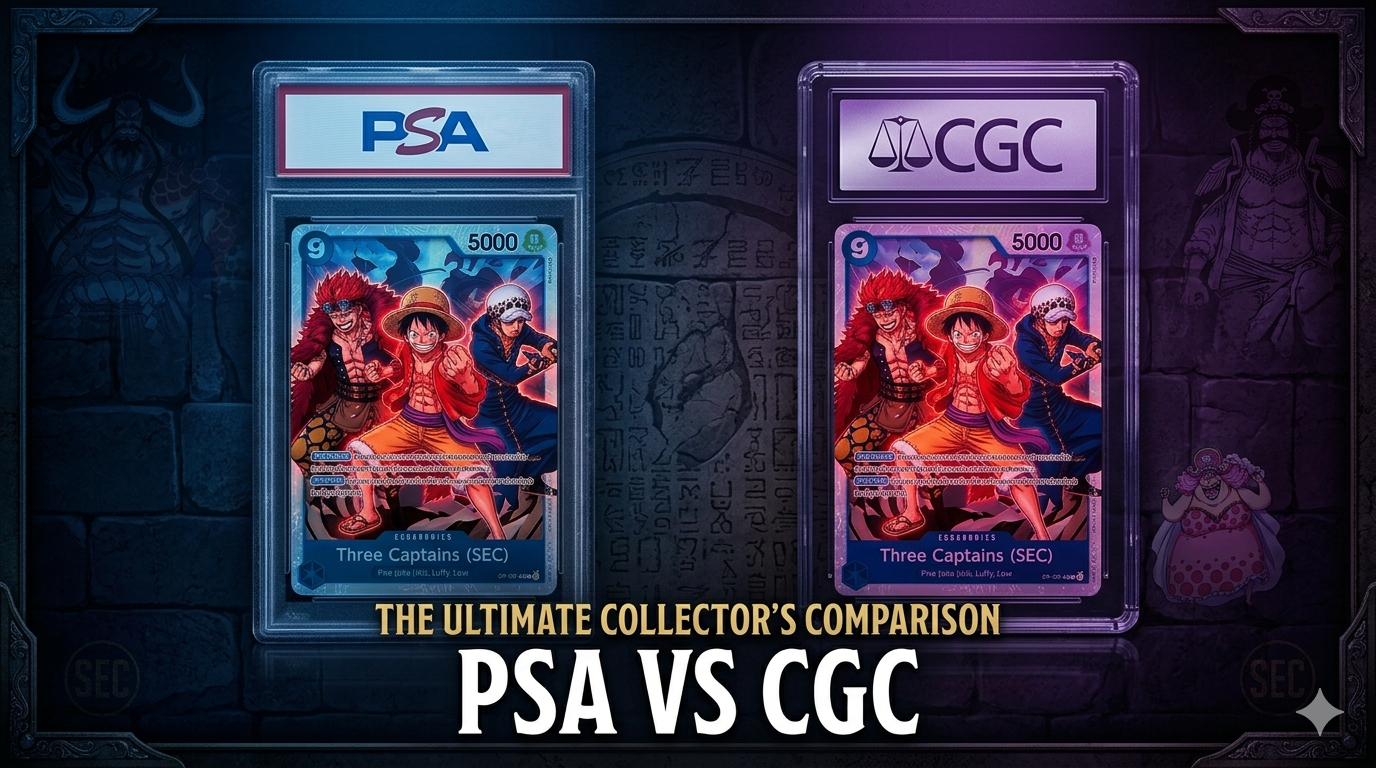
PSA vs CGC for One Piece TCG: Which Grader Should You Use?
PSA and CGC are the two main grading services used by One Piece TCG collectors. PSA has the brand recognition and the higher resale premiums. CGC is cheaper and faster. Choosing the wrong one for your card can eat into your profit, or wipe it out entirely.
Cost comparison
| Tier | PSA | CGC |
|---|---|---|
| Cheapest tier | Economy: $25/card | Economy: $18/card ✓ |
| Standard | Regular: $50/card | Standard: $25/card ✓ |
| Express | Express: $150/card | Express: $50/card ✓ |
| Fastest | Super Express: $300 | Walkthrough: $150 ✓ |
CGC wins on cost at every tier. For a 10-card submission on Economy, you're paying $250 with PSA vs $180 with CGC, a $70 difference that compounds quickly when submitting in bulk.
Turnaround times
| Tier | PSA | CGC |
|---|---|---|
| Economy | 3–6 months | 6–10 weeks ✓ |
| Standard | 45 days | 3–4 weeks ✓ |
| Express | 15 days | 1–2 weeks ✓ |
CGC is faster at every tier. PSA Economy's 3–6 month turnaround is a real drawback. Your capital is locked up and card values can move significantly in that window. If you need cards back quickly (e.g. to sell before a new set drops), CGC is the clear choice.
Resale value: where PSA wins
Despite losing on cost and speed, PSA dominates on resale value, particularly for top-tier One Piece cards. PSA 10 copies of Shanks OP01-120 sell for significantly more than the equivalent CGC 10 on eBay.
The gap is smaller for mid-range cards (R, UC) where buyers are less brand-sensitive, but for SEC and L rarities, where a €400+ sale hinges on buyer confidence, PSA's label carries weight that CGC hasn't yet fully matched in the One Piece market.
Approximate resale premium: PSA vs CGC (One Piece SEC)
Grade 10
PSA: +20–35%
vs CGC same grade
Grade 9
PSA: +10–20%
vs CGC same grade
Grade 8
Roughly equal
buyers are more price-sensitive
Grading standards: which is stricter?
Both companies use a 10-point scale, but their standards aren't identical. Based on collector experience across One Piece TCG submissions:
- Centering: PSA enforces a 60/40 rule for PSA 10. CGC is reported to be slightly more lenient on centering.
- Surface: PSA is strict on print lines and foil scratches. CGC tends to be comparable.
- Edges and corners: Both grade similarly. Any visible whitening or rounding caps you at 8.
- Subgrades: CGC offers subgrades (centering, corners, edges, surface) on request, useful for understanding why you got the grade you did.
In practice, collectors report that CGC 10 is achievable on slightly off-centre cards that PSA would grade 9. This means your PSA 10 rate may be lower than your CGC 10 rate, but the PSA 10 is worth more, so it can balance out.
One Piece TCG community: PSA or CGC?
The One Piece TCG collector community is still maturing compared to Pokémon or Magic, where PSA dominance is entrenched. As of 2025, the majority of high-value graded One Piece sales on eBay are PSA. CGC is growing, particularly with newer collectors who appreciate the lower cost and faster turnaround.
For resale, PSA slabs consistently command higher premiums. CGC is accepted but less familiar to European buyers.
Our recommendation by card type
High raw value makes the premium fee worthwhile. PSA 10 commands a significant premium at resale.
Same logic as SEC for cards worth €60+. Below €60 raw, CGC may make more sense.
Depends on the specific leader's value. Top leaders (Shanks, Roger) → PSA. Budget leaders → CGC.
Lower raw value means PSA fees eat too much margin. CGC's cheaper tiers preserve profit on bulk submissions.
Bottom line
There's no universal answer. The right grader depends on the card's value, how quickly you need it back, and your target buyer. For most One Piece TCG collectors going after high-value SEC and SR cards: PSA is still the safest choice for resale value. For everything else, CGC's economics are hard to beat.